Moneylife:
Pune: Thursday, October 18, 2012.
Maharashtra
Chief Information Commissioner Ratnakar Gaikwad has urged public authorities to
comprehensively abide by Section 4 of the RTI Act which makes it mandatory for them
to put most of the information in the public domain.
Seven years
down the line, one of the setbacks of the RTI (Right to Information) Act is the
failure/unwillingness of public authorities to abide by Section 4 which makes
it mandatory for them to upload most of their functions and activities on the
website. If such information is put in public domain, a citizen will hardly be
required to file a RTI application. He would get the information at the click
of the mouse.
At the
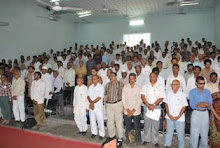
one-day workshop held in YASHADA in Pune last week on the occasion of the
seventh anniversary of RTI Act, Maharashtra Chief Information Commissioner
Ratnakar Gaikwad stated in no uncertain terms that, “charity must begin at
home. The mandate has been given to us to implement pro-active disclosures
under Section 4 of the RTI Act and all public authorities must be committed to
it.”
He lamented
that many public authorities are still not aware of the intricacies of Section
4 (a) and (b) and urged civil society groups to perform social audits
regularly. Mr Gaikwad states that, “There are 81,000 Public Information
Officers (PIOs) and 23,000 First Appellate Authorities in Maharashtra. How do
we know whether the public authority is doing his duty or not? Civic groups
should audit and report the quality of pro-active disclosures by dividing them
into A/B/C and D categories and send the reports to the CIC. I assure immediate
action.”
Mr Gaikwad,
in his role as the SCIC, has directed heads of all public authorities to
pro-actively be involved in suo motu disclosure of information on their
respective websites. He stated, “I have issued directions under Section 19 (8)
to collectors, commissioners, CEOs, heads of departments and director of health
sciences that it is not enough for heads of public authorities to ensure that
PIOs are merely functioning. They must monitor whether pro-active disclosures
under Section 4 are being uploaded in the public domain on a regular basis.
Some of them shrewdly appoint low-rung officers as PIOs and AAs. There are a
few though who do show a lot of sense of responsibility. In Mumbai for example,
ward offices do not feel that RTI is their responsibility. Hence, I have
recently written to the chief secretary and municipal commissioner of Mumbai to
find out where RTI is properly implemented and where it is not. I am awaiting
the report.”
Mr Gaikwad
urged citizens to use the RTI to improve governance and not to ask details
which would waste the time of the PIOs. Giving an example he stated, “Some
citizens have been asking frivolous queries like what is the menu served for
lunch for officers with details like how many vegetables were used for it and
so on. We must realise that PIOs have to do other works too. Hence, citizens
must focus on vital information which will bring in transparency and
accountability. Sincerity in seeking information is of utmost importance.”
Praising
social activist Anjali Damania, Mr Gaikwad stated that, “I was impressed with
the way Anjali Damania pursued seeking information regarding the irrigation
scam. After she applied under RTI, she was not disclosed the information she
required. When she approached me I asked the secretary, irrigation, to provide
her with complete information. She has gone on record to say that CIC helped
her immensely. Another RTI activist had pursued the same information and was
given the needful within a week. However, he insisted that it should be given
in a particular format. Now, this would have taken a lot of time. There was a
stark contrast in approach of the two RTI applicants. It is not always possible
for PIOs to supply information in the format that the citizens ask for hence
the former should be considerate. Also, our democracy will be strengthened if
citizens use the information they have sought by pursuing it and taking it to
the logical end.”
Putting the
onus on the PIOs and FAAs to perform their duties as mandated by the RTI Act,
he stated that, “those who are providing information and taking decisions
should be accountable. Everybody in the government is a public servant and RTI
is a good instrument to remind those serving in the government and change their
mindset. Every government servant must remember that today he is questioned by
the citizen who may be a Below Poverty Line (BPL) or illiterate but has the
right to know and has the right to access information.”
Lamenting
that many officers are averse to disclosure of file notings, Mr Gaikwad
stressed that, “officers should have the moral courage to disclose whatever
they are writing on the files. Whosoever
is highly placed in the bureaucracy and is taking decisions should do so with a
full sense of responsibility.”
In
conclusion, Mr Gaikwad stated that, “the main challenge before Maharashtra is
capacity building. For the Act to become a strong weapon in the hands of the
citizens to strengthen democracy, the civil society, public authorities and
Information Commissioners should work together. We are in the seventh year and
we should not be discussing (Section 4). There has to be a culture of
transparency.”
Department of
Personnel & Training (DoPT), Centre for Good Governance (CGG), Hyderabad
and YASHADA have worked together to develop an audit tool to help
citizens/public authorities, Information Commissioners and NGOs to assess
whether a particular public authority is comprehensively executing the
pro-active disclosures under Section 4. YASHADA has conducted an audit of more
than 400 offices using this tool. The assessment is measured by putting the
government office (which is audited) into A, B, C or D category depending on its
pro-active disclosures in the public domain. All those who are interested in
the tool-kit may write to Dr Pralhad Kachare, director of the RTI Cell of
YASHADA at pkachare@gmail.com.
What must
a government office disclose under Section 4?
Under Section
4(1) (b), every public authority is mandated to publish the following
categories of information within 120 days from the enactment of the Act:
1.
Particulars
of the public authority
2.
Powers
& duties of officers & employees
3.
Procedure
followed in decision making
4.
Norms
for discharge of functions
5. Rules,
regulations, instructions, manuals and records under its control/used by employees while discharging functions
6.
Categories
of documents held by the authority or which are under its control
7. Arrangement
for consultation with or representation by the members of the public in relation to the formulation of policy or implementation thereof
8. Boards,
councils, committees and other bodies constituted as part of the public
9. Directory
of officers and employees
10. Monthly remuneration received by
officers & employees including system of compensation
11. Budget allocated to each agency
including all plans, proposed expenditures and reports on disbursements made
etc.
12. Manner of execution of subsidy
programmes
13. Particulars of recipients of
concessions, permits or authorisation granted by the public authority
14. Information available in electronic
form
15. Particulars of facilities available to
citizens for obtaining information
16. Names, designations and other
particulars of public information officers









.JPG)
.JPG)