Sunday, December 02, 2018

How the Gujjar-Bakherwals of Dodhpathri made RTI their weapon : ByNawal Watali

Free Press Kashmir: Srinagar: Sunday, December 02, 2018.
Working tirelessly for a better tomorrow, some 12 Gujjar-Bakherwal social warriors have used RTI as their ‘weapon of change’ in one of the most restive regions of the world. Undeterred and undaunted by the bleakness of today, their story is of the silver lining in Kashmir today.
The meadows of Dodhpathri, nestled in the Pir Panjal range of the Himalayas, have emerged as an ubiquitous tourist destination. But unbeknownst to all, the serenity of this place hides behind it a constant struggle of a few who are fighting against under-development and unaccountability on their own.
Dodhpathri, the land of RTI activists, has some quite inspiring and motivated people from the Gujjar community who after being ‘betrayed’ multiple times by the authorities have taken matters in to their own hands.
Inhabitants of the area have made RTI a weapon against fighting corruption and inefficiency in governance.
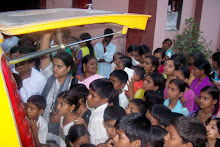
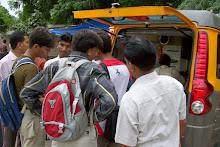
As result, the process of filing an RTI application has become an important part of curriculum to even school students. Instead of engaging in violent confrontation, the RTI warriors have demonstrated their courage in stepping-up to the authorities through their constitutional rights.
According to them, the most important aspects for a social revolution are courage and composure. These RTI warriors seem to have mastered both of these traits.
Dodhpathri.
In a region where their community has always been on the margins, these RTI warriors are being the change they want to see in the lives of their peers.
Their journey on holding the state accountable and fighting for transparency started when they were on the path of searching for an alternative livelihood. It had come to a point when the only viable path for livelihood for them was to engage in timber smuggling. A local resident sums up the community’s dilemma, “There was, and still is immense poverty and the wood around was the easiest option we could see.”
At that time, a former government medical officer, Dr. Sheikh Ghulam Rasool, founder of Jammu and Kashmir RTI Movement, who had served in Mujpather, the village where Gujjars and Bakherwals live in during the winter season, saw the degrading condition of the forests around.
From the year 2006, he started taking up the cause of sensitising the people about the importance of a healthy ecosystem and sustainable livelihood.
“We hardly respected our forests and environment, but after having conversations with Dr. Sahab we understood that these trees are the only asset we have,” says Nazir Ahmed, a Taxi Driver, residing in Dodhpathri.
“And when we started calculating the amount that we earned after bribing the police, forest officers etc, we came to a conclusion that timber smuggling was not even providing us with any extraordinary level of income.”
At this point, the community members started opening up shops in the meadows of Dodpathri. But, even that did not last long. Their shops were taken over by the authorities promising them new shops in the coming years.
“It has been almost 10 years since then and we are still waiting for those shops,” a local RTI activist says. “This is when our fight with the unjust state and establishment started.”
The first instance where Dr. Sheikh guided the community to file an RTI application was in the year 2008 against the teachers of the mobile school where the local Gujjar kids studied.
Dr. Sheikh Ghulam Rasool.
With the status of Scheduled Tribes, the children of Gujjars and Bakherwals receive a fixed amount of scholarship from the government. For two years, a number of children had not received their scholarship as per the policy. After being questioned by Nazir, the teachers responded that for these years money hadn’t come from the education department itself.
However, Nazir filed an RTI application to see if the teacher was telling the truth. “None of the children were my own, but I was and will always work for my community,” he said.
Within two weeks of filing the application, the teacher, who also happened to be his maternal uncle, came to Nazir’s house to ‘reconcile’ but the RTI activist refused to budge.
The RTI response had revealed that the scholarship money of the 5-6 kids was being pocketed by the teacher himself.
The teacher, rather brazenly, justified this blatant theft saying that the kids couldn’t have handled so much money. After he was exposed, he promptly handed the money to the kids in the presence of Nazir.
Having learned about the corruption and inefficiency through his first RTI query, Nazir soon filed a second application seeking the names of beneficiaries of the Public Distribution Scheme (PDS).
To his shock, his deceased grandfather and his brother were in the list!
“I quickly understood how corrupt these food officers were, usurping the food that came on the name of my dead relatives,” Nazir recounted his surprise at the revelation.
“After the information came in,” he continued, “these food officers came to my house offering me bribes in exchange of dropping the case. But did I? No. How could I? I was fighting for the rights of my community, of the people who can’t voice their opinions. I, instead, asked them to take the money back, and give the villagers what is rightfully theirs.”
Another activist, Abdul Rashid Sheikh, filed an RTI asking for the rates of food items in this distribution scheme. The RTI response revealed corruption in the pricing model as well. While the sugar was being sold to people at Rs 40/kg, it was supposed to cost only Rs 25/kg.
“I felt quite satisfied and content that in this small way only I could help my peers,” Sheikh said.
However, the corruption was not limited to only education or food but was rampant everywhere. The houses in the area were receiving dirty water which clearly meant that there was something wrong with the water pipelines.
Rashid filed an RTI to the PHE department asking for the information on repair and replacement of pipelines. The RTI response revealed that funds were regularly released for the reparation and replacement of the water pipelines but no work had been done on that front by the local authorities.
Already the immense satisfaction and sense of community service that this activism has provided to the community in general and these activists in particular goes beyond exposing instances of corruption.
Rashid perfectly sums up this sense of pride, “Since we have started exercising this right, even the BDO treats us with respect, the same person who never permitted us to enter his office and insulted us on our dirty clothes.”
Explaining the importance of this social activism, Nazir says, “RTI, we now understand, is the most important tool to get the work done. We are a bunch of illiterate people, who never saw a school building during our childhood, but RTI has given us the power that even transcends that of administrative officers.”
This group, under the guidance of Dr. Sheikh Ghulam Rasool, is fighting administrative inefficiency and governmental apathy through their constitutional rights. As is evident, this has not only instilled a sense of civic responsibility among the community but has also bolstered their confidence as the leaders of social change.
These RTI warriors have overcome the hurdles of their surroundings and have become agents of change, a model of social activism that is worthy of replication everywhere, especially by the socially and economically backward communities.

We’ll sue government if RTI bill is passed with exemptions – Akoto Ampaw

Ghana Web: Ghana: Sunday, December 02, 2018.
The Coalition of CSOs on the RTI Bill is threatening legal action if the bill is passed with exemptions that are inconsistent with the constitution.
According to a member of the coalition, Akoto Ampaw, the bill if passed must reflect the reality that indeed leaders in a democratic state are servants of the people.
The Private legal practitioner spoke to Citi News during the coalition’s visit to parliament earlier today to protest the delay in the passage of the RTI Bill.
“State bodies saying they cannot disclose information defeats the whole purpose of RTI and that is why you will always find out that in the process of the RTI, there are always strong battles between people who stand for transparency and openness and accountability and those who want to continue the old, archaic, authoritarian tradition of control and secrecy in governance and you will see that unfortunately there are people in our Parliament who are for the continuing secrecy and control and anti democratic policy and some of them are even saying that this RTI is a threat to Ghana."
“Parliament has a duty under the constitution to ensure that their exemptions are consistent with the provisions of the constitution and my point is that yes; they are parliamentarians, they can suppose that we can have their say and they will have our day but if they go ahead and mutilate the exemption provision, we are ready to take whatever law they pass to the Supreme Court for the Supreme Court to strike it down as inconsistent with Article 21 (1) of the constitution.If Parliament as exercising the power of government, passes the RTI bill into law, which frustrates the constitutional provision that Ghanaians have access to information we will challenge it.”
Journalists who are members of the Media Coalition for the passage of the RTI bill into law, together with some civil society organizations on Friday joined a public campaign as part of measures to mount pressure on government to pass the bill.
Despite several appeals, the bill, which seeks to promote a fundamental human right guaranteed in the country’s 1992 Constitution and recognized as a right under International Conventions on Human rights, has not been been passed, although it has been in and out of Parliament for nearly two decades.
The campaign dubbed #RTI Red Friday saw members of the coalition and journalists engage in street advocacy where they distributed leaflets to citizens educating them about the importance of the RTI law.
Some members of the Coalition also gained access to the gallery of Parliament clad in their red attires to draw the attention of the MPs. Although they were initially prevented from entering the chamber despite an earlier agreement, some minority MPs intervened to ensure they gained entry.
We’ll pass RTI bill as promised – Government
A Deputy Minister for Information, Nana Ama Dokua has said although the bill must be passed, it must be done in such a way that it will serve a good purpose.
“Although we wish the bill is passed in no time, we would also want to have a bill that will be useful. It is not up to the executives to rush Parliament, but rather Parliament must go through the bill to make the necessary amendments before it is passed. So I think it is in our interest to have the bill passed”, she said.
Pressure for RTI bill to be passed
The Bill as has been drafted is to give substance to Article 21 (1) (f) of the Constitution which states that “All persons shall have the right to information subject to such qualifications and laws as are necessary for a democratic society.”
Failed political promises
Various advocacy groups emerged to press for the immediate passing of the bill into law in 2002, and it was reviewed in 2003, 2005 and 2007.
In October 2016, the Bill was withdrawn and replaced with a new one which was immediately laid.
Following the dissolution of the Sixth Parliament of the Fourth Republic, and the swearing-in of the new Parliament in January 2017, the Bill had to be re-laid by the new government for work to commence on it.

Mumbai University made Rs 4.8 cr from re-evaluation

DNA: Mumbai: Sunday, December 02, 2018.
As per the information provided under an RTI, University of Mumbai earned Rs 4.8 crore from the re-evaluation of the exam papers and around Rs 15 lakhs by issuing photocopies to students from the 2016-17 academic year.
In the academic year 2017-2018, the amount received by the varsity on re-evaluation and photocopies from the students are 3.4 crores and around 13 lakh respectively.
The information was provided to an RTI activist, Vihar Durve, who had filed an RTI in which it was revealed that around 97,000 students applied for re-evaluation out which 35,000 were wrongly marked failed in their examination of the 2016-17 academic year.
They cleared their exams only after re-evaluation of their answer papers. Even while giving answer sheets sought under re-evaluation, some of students were even given wrong answer sheet. So if an answer sheet was sought by a student who had written exams in Marathi language, he was given answer sheet of English language.
Durve said, “If Mumbai University (MU) has earned so huge amount in re-evaluation and photocopies then they should provide compensation or refund to those students who were wrongly marked failed in their examination.”
Durve has asked in a recent RTI about the information of how many students have passed their first half examination of 2018 on which the University has revealed that the process of declaring the results of those students are still in process and so the information on the same cannot be provided. When contacted the officials for comments, they refused to comment.

RTI activist alleges death threat

Indian Express: Jaipur: Sunday, December 02, 2018.
A Right to Information (RTI) activist on Saturday claimed that he has been receiving death threats from the husband of a Sarpanch, who is allegedly a supporter of the ruling party. Dhiren Kumar Bal, who has been working to expose irregularities in various Government development works being carried out in rural areas, has lodged a complaint with Binjharpur police seeking security claiming his life is in danger.
Bal, in his complaint, said he had filed an RTI application with Binjharpur block seeking information on Government development works being carried out in Chandramun gram panchayat on November 27.
He said Chandramun panchayat Sarpanch’s husband Ramesh Chandra Das threatened to kill him unless he withdraws the RTI application. “Ramesh stopped me on road while I was returning home from the nearby market on Friday. He abused me and asked why did I file the RTI application seeking information on various development works in the panchayat. He threatened to kill me if I did not withdraw the RTI application,” said the RTI activist in his complaint.

AICC member seeks inquiry report against MLA PK Sasi

Indian Express: Kerala: Sunday, December 02, 2018.
All Indian Congress Committee member Deepthi Mary Varghese on Saturday urged the CPM leadership to disclose the complaint of the victim and the report submitted by the party inquiry Commission against P K Sasi MLA in the alleged sexual harassment case.
“The action taken by the CPM against the MLA was only an eyewash. I have sought a copy of the report under the RTI Act from the party. If the party refuses to provide a copy of the report as per the Act, I will approach the court. People have the right to know.
‘Women’s safety’ was the prime slogan in the CPM’s election manifesto. However, they have miserably failed to keep their promise,” she said. Deepthi said she got information from reliable sources, the offence committed by the MLA attracts section 354 (Assault or criminal force to woman with intent to outrage her modesty), 354 (a) (Sexual harassment) and 509 (Word, gesture or act intended to insult modesty of a woman) of IPC.

No relief under Article 226 for Contractual Employees of State entities, Allahabad HC

Bar & Bench: Allahabad: Sunday, December 02, 2018.
The Allahabad High Court recently observed that employees of State entities cannot always invoke Article 226 jurisdiction to obtain reliefs in cases protesting the termination of their services.
A Division Bench comprising Justices Sudhir Agarwal and Ifaqat Ali Khan clarified that the extent to which a High Court can exercise its writ jurisdiction under Article 226 of the Constitution in such matters would depend on whether the employee’s service conditions are governed by a statute or if it is simply in the nature of a contract.
The Court was dealing with writ petitions filed by two former employees contending that they had been wrongfully terminated from their managerial posts by the Central Uttar Pradesh Gas Limited (CUPGL). They were terminated from service by CUPGL after an inquiry into allegations of financial and operational irregularities, by giving them one month salary in lieu of the notice period.
Contesting the case brought by the two employees, CUPGL argued that the petitions were not maintainable as CUPGL does not fall within the category of “State” under Article 12 of the Constitution. To buttress this contention, the following points were raised,
“Neither Central Government nor State Government has any stake in CUPGL; no financial commitment or liability in CUPGL has been undertaken by any of the Government; it does not perform any Governmental work and is not supported and financed by either of the Governments.“
A Central Information Commission order passed in 2016, rejecting an Right to Information (RTI) request on the ground that CUPGL does not fall within the ambit of the RTI Act was also cited in this regard.
However, the Court disagreed in view of the fact that the control of CUPGL rested with three State entities i.e. Bharat Petroleum Company Limited (‘BCPL’, holding 25% shares), Gas Authority of India Limited (‘GAIL’, holding 25% shares) and Indraprasth Gas Limited (‘IGL’, holding 50% shares). As noted in the judgment,
“… it cannot be doubted that its functional control is in the hands of Public Sector Companies like, BPCL, GAIL and IGL. Clause 120 of Article of Association of CUPGL shows that so long as holding is equal, both i.e. BPCL and GAIL will have equal representation in the Board. Chairman of Board of CUPGL shall be either a whole time Director of GAIL or Chairman or Managing Director of BPCL or his nominee.
Therefore, GAIL and BPCL both have pervasive control in CUPGL. Since holding Companies are Central Government Companies, which have pervasive control, and BPCL having already been held to be ‘State’ within the meaning of Article 12 of Constitution, we do not find any hesitation in holding that CUPGL is an instrumentality of State and within the ambit of term ‘other authorities’ under Article 12 of Constitution of India it is a ‘State’ within Article 12.“
Nevertheless, the Court went on to hold that it cannot provide any relief to the petitioners under Article 226, given that the nature of their employment was contractual. Merely because the petitioners were employed by a State entity, it does not confer upon them the status of a statutory government employee, the Court observed.
“…CUPGL even if taken to be a ‘State’ within the meaning of Article 12 of Constitution, this by itself would not mean that petitioner can claim status of a Government Servant or holding a post governed by ‘status’. Nature of engagement/ appointment of petitioner is not to be governed by ‘status’ but by a ‘contract of service’ entered into between master and servant.“
There was no statute governing the conditions of their employment. Further, that they held managerial posts also meant that they were not governed by any standing orders passed under the Industrial Employment (Standing Orders) Act, 1946.
“It is not in dispute that terms and conditions are not governed by any Statute or statutory provision or by any provision made under any authority of Statute. Petitioner being in the Cadre of Manager, his terms and conditions are also not governed by Standing Orders made by Employer with respect to employees governed by provisions of Industrial Employment (Standing Orders) Act, 1946 (hereinafter referred to as “Act, 1946”). In these circumstances, in the cases like petitioner, consistently it has been laid down that employment is simply a part of contract.”
Explaining the difference between an employee conferred with a ‘status’ (such as government employees) and those who are employed under a contract, the Court said,
“…In the language of jurisprudence, ‘status’ is a condition of membership of a group, whereof powers and duties are exclusively determined by law and not by agreement between the parties concerned. Thus, where appointment and conditions of service are governed by Statute, relationship of ’employer’ and ’employee’ is that of ‘status’ and not a mere contract. However, in other cases, it is purely a contract of service resulting in a relationship of ordinary master and servant.“
In cases involving only a contractual relationship, the Court is barred from reinstating employee, considering the provisions of the Specific Relief Act, 1963. As noted in the judgment,
“If employment is terminated or contract of service is terminated, Court shall not grant relief of reinstatement, i.e. specific performance of contract of personal service, as it is barred by the provisions of Specific Relief Act, 1963 (hereinafter referred to as “Act, 1963”) and, therefore, no remedy under Article 226 shall be available since employee, if complains about wrongful termination of service, then must avail remedy in common law by claiming damages…
In the present case also, relationship of employment between petitioner and CUPGL is purely and simply an ordinary contract of service which is not governed by any statute or statutory provision. In such cases, a contract of service cannot be sought to be enforced by Court of law by giving relief of reinstatement or continuance in employment as this relief is barred under Act, 1963.“
It was also not the case of the two petitioners that the terms of their contract were unconstitutional or it was an unlawful contract in terms of Section 23 of the Indian Contract Act, 1872.
In view of these observations, the Court dismissed the two petitions, holding,
“In view of discussions made hereinabove, no relief, as sought for, can be granted to petitioners. Both the writ petitions lack merits and are, accordingly, dismissed.“
The respondent was represented by Advocates Pranjal Mehrotra, Siddhartha and Yashovardhan Swarup. Advocates Pushkar Mehrotra, NK. Singh and Sameer Sharma appeared for the petitioners.
(copy of order)

Those opposing transparency in J&K Bank have something to hide: Dr Jitendra

Daily Excelsior: Jammu: Sunday, December 02, 2018.
Union Minister of State in PMO with Independent charge of North Eastern States, Dr Jitendra Singh while making a strong dig at the forces opposed to bringing transparency in J&K Bank, said they have something to hide as they do not want to get exposed after bringing the Bank under the purview of RTI.
Talking to reporters on the sidelines of a function here today the Union Minister said he didn’t see any merit in opposing the transparency in J&K Bank and lauded the decision of State Governor in declaring J&K Bank as a Public Sector Undertaking and bringing it under purview of RTI Act.
“This decision will make the working of Bank transparent and efficient and no one should feel offended with the decision”, Dr Jitendra Singh said, adding instead every one should come forward and not only appreciate the people friendly decision of Governor but render his or her cooperation in total implementation of the decision.
He said J&K Bank was established by Maharaja Hari Singh to provide benefit to the weakest of weak and downtrodden people and there is a need of audit whom it has given benefit during last 50 years.
“The bank was formed to benefit the poor and not a few families or the cooks working in their kitchens. Prime Minister Narendra Modi is working to bring transparency in the country. If they (opposition) are against transparency that means they have something to hide,” Dr Singh said.
Maintaining that BJP respects the decision of the Governor not only regarding J&K Bank but other public welfare measures taken by him, the Union Minister expressed the hope that he will take future decisions with the same grace also.
Outrightly rejecting that Narendra Modi led Union Government had to do any thing with dissolution of State Assembly, Dr Jitendra Singh said that BJP does not interfere in working of Constitutional bodies. He accused the Congress of making baseless allegations in this regard out of their guilt consciousness.
The Union Minister while ridiculing Congress outbursts in this regard, said “they presume that BJP will also follow same approach but our party has highest regard for Constitution and democracy and we don’t indulge in such undemocratic practices”.
Dr Jitendra Singh said his party respects Governor Satya Pal Malik’s decision of dissolving the Jammu and Kashmir Assembly, as it believes in maintaining the sanctity of the country’s Constitutional institutions.
“The decision of the Governor (to dissolve the Assembly) is paramount for us. Keeping in mind the sanctity and honour of the institution he heads, we will accept his decisions in the future as well,” Singh said.
Terming the decision of State Administrative Council (SAC) to repeal the Roshni Scheme as a decision in right direction, Dr Jitendra Singh said those who have already taken the benefit and given the proprietary rights of the land under the Act should also come under scrutiny and probe.
About a Jammu University Professor allegedly referring to freedom fighter Bhagat Singh as a “terrorist”, the Union Minister said the agency concerned will take cognizance of it.
“But, a bottom line has to be drawn to maintain the patriotic and nationalistic integrity in India”, he said.
The bottom line has to be commitment to the integrity and supremacy of the nation and this is observed even in some of the most developed democratic countries such as the United Kingdom and the USA.
“Those who go to these countries and acquire the citizenship, they too do not utter a single world directly or indirectly which would hurt the integrity of the country where they have settled,” Dr Jitendra Singh said.

SIC order was not followed in 17% cases

Times of India: Nagpur: Sunday, December 02, 2018.
The Nagpur bench of State Information Commission (SIC) heard 6,923 appeals between January 2017 and October 2018 and officials did not follow its orders in 1,174 cases which translates into 17%. Information commissioner Dilip Dharurkar said that various actions were taken against these officials.
Addressing a press conference on Saturday, Dharurkar said that state government’s decision to allow citizens to peruse files on one every week would certainly reduce the number of cases coming to the SIC. “Many times people realize by just going through the document that they don’t need it,” he added. He further said that digitalization of government records was also reducing the need of citizens to approach the commission.
When Dharurkar had taken charge of Nagpur bench in January 2017 around 2,000 cases were pending. “Now the pendency is next to negligible,” said the commissioner.
He further said that as per law, a lot of information has to be made public by government departments without anybody seeking it under Right to Information (RTI) Act. “Many times I get cases where petitioners complain that this law was being violated by a department. I order the officials to publicly display information,” he added.
Dharurkar said that while RTI had empowered the citizens it was misused by some people. “Media can play a big role in stopping this misuse,” he added.

Saturday, December 01, 2018

A city that can’t keep its children safe

Enbulletin: Gurgaon: Saturday, December 01, 2018.
With every visit Anita makes to a police station, her disappointment increases, as does her family’s. Her younger brother Suraj (5), and Pooja (8) and Arti (6), daughters of their neighbours, went missing on June 26 this year from Chakkarpur’s Krishna Market, behind Sahara Mall. The children were last spotted playing at the Sai temple in the crowded market lane, which they frequented almost every day. Suraj had suffered a head injury three years earlier, which left him unsteady and unable to speak. 
A police complaint was filed and posters were plastered around the city. Five months on, the three have yet to be found. The families have repeatedly met police and officials from the state child commission. They were promised the children would be located soon. Reality has been quite different.
“Suraj can’t even tell his name, God knows what happened to them,” Anita says. “We even met the state women’s commission, which had promised us a CBI inquiry would be initiated if the children are not traced within three months. It is now five months.”
In Gurgaon, since 2010, 700 children have been untraced after ‘missing’ complaints were filed with police. Around 58 FIRs for missing persons were registered in 2010; out of this, 23 children are still unaccounted for. The worst years were 2014, 2015 and 2016 — 600 children went missing. Crimes against children have also gone up — cases of sexual assault and murdered filed under the POCSO Act, from 128 in 2016 to 142 in 2017 and 133 till October 31 this year. The numbers raise concerns about issues like human trafficking and children living in slums left without daycare when parents go to work — like the girls targeted by alleged paedophile and serial killer Sunil, who was arrested last week for raping and murdering a three-year-old girl at a in the city’s new sectors. After his arrest, police said he was involved in the rape and murder of at least nine girls — four in Gurgaon since 2013, with only one of the girls surviving.
The city’s faceless residents
Gurgaon’s great wealth is its migrant population. And it’s also migrant whose toil has gone into building the city’s gleaming malls, swanky office complexes and plush residential societies. Yet, the children of these men and women are more vulnerable than anyone here, with little thought given to their care and safety. Daycare facilities are notable for their absence and, barring a handful of developers, no one builds crèches at construction sites. It all points to a massive failure of responsibility and a worrying betrayal of trust.
Migrant workers mostly stay in makeshift shanties or labour colonies near construction sites. The families are holed up in tiny spaces and share amenities like toilets and courtyards with their neighbours. The children, meanwhile, remain unsupervised through the day, whiling away their time playing with their peers. This is when criminals can, and often do, strike. “The younger the child, the more adaptable and submissive she will (be) at a brothel. An older one might resist, while the younger one would be really scared and give in easily. That is why those below five years of age are preyed upon more,” says Rishikant, founder of Shaktivahini, an NGO. According to the district health department, 14% of children up to five years of age (around 1.5 lakh) do not go to school or an anganwadi.
Innocence denied
The sight of a solitary Saroo in Garth Davis’s Oscar-nominated movie ‘Lion’ evokes a childhood lost. Separated from his mother, a daily-wage labourer, and older brother, this five-year-old reawakened images of the millions of children left unattended in tin sheds or at construction sites by migrant parents. Some like Saroo go missing, others fall to a fate much worse.
In 1996, the government introduced the Building and Other Construction Workers (Regulation of Employment and Conditions of Service) Act, which requires every builder with 50 female workers to provide a crèche that has adequate accommodation for children under six years. The law, however, is poorly implemented, and the labour force is mostly ignorant of the fact that this crucial facility is available to them.
Even government agencies do not seem to feel the need to have such crèches at their construction sites. According to an RTI, the public works department (B&R) took charge of four projects in Gurgaon in 2015-16, none of which had crèches — evidence of the government’s apathy when it comes to implementing its own rules.
Gurgaon has around 3.25 lakh registered workers, of which about two lakh are employed on a contractual and temporary basis. The remaining 1.25 lakh are regular workers. Besides, there are approximately 30,000 labourers working at over 160 construction sites across the city.
Most of the labourers come from Uttar Pradesh, Bihar, West Bengal and Rajasthan. Contractors have networks in these states. “There are two types of labourer at the construction sites – single men and families. And it is the responsibility of the contractor and developer to ensure safety and security of families, especially children,” says Surinder Singh, director of GLS Group.
Dinesh Kumar, a contractor at a residential project on Dwarka Expressway, says some labourers live at construction sites and some set up makeshift structures near the site. “Single-men labourers live on one side of the project while families make their temporary brick houses on the other,” he says. And security guards, he adds, are also deployed.
But only a few big developers arrange for crèches for children of labourers, says another contractor. “Hardly five or six construction sites in Gurgaon have a crèche for children of workers,” he says. Yet, according to Praveen Jain – president of realty association Naredco (Haryana) — most developers have established crèches at construction sites, as per guidelines. Even the labour department claims a majority of such sites have crèches.
Claims, reality don’t match
What all the data suggests, and what each horrific incident corroborates with frightening regularity, is that the authorities have not done due diligence when it comes to guaranteeing the safety of these boys and girls, pointing to a clear institutional failure in providing children of blue-collar workers a safe space to spend their days.
“The provision for crèches at the worksite is a legal mandate for the builders, under the Building and Other Construction Workers Act 1996, which is grossly omitted by the builders either due to ignorance or due to a perceived burden in running a crèche on the site,” points out Seema Sahai, COO of Mobile Crèche, whose NGO leads the way in Delhi-NCR in providing daycare for disadvantaged kids.
It is also true that the infrastructural health of Gurgaon has often suffered due to agencies working at cross purposes. In this case, though, it’s lack of coordination that has left migrant workers and their wards in the lurch. Considering that Gurgaon is a hive of construction activity, the labour department, developers and district administration could all have come together and made workers and their families aware of the anganwadis in and around the city, which can act as much-needed sanctuaries for their children (even though many are constrained when it comes to manpower and resources), if, somehow, they couldn’t make crèches available on their own. And they still can. In this case, it’s never too late to start. (Additional reporting by Rao Jaswant Singh)

Physically-challenged man blocked from Parliament because he can’t stand for Speaker

Ghanaweb: Ghana: Saturday, December 01, 2018.
A physically-challenged man was denied entry into the chamber of Parliament by security on Friday because he cannot stand to acknowledge the Speaker of the House.
“Their reason is that they were asked not to allow anybody who cannot stand when the Speaker is coming or passing or is rising,” the man who was discriminated against, Alex Tetteh, told Citi News.
It is, however, unclear whether this decision was sanctioned by the leadership of the House.
Mr. Tetteh, who is the President of the Centre for the Employment of Persons with Disability, said this was prompted by an incident on Thursday. “They said that an incident happened yesterday [Thursday], where one person could not stand and they saw that he was a person with disability and for that matter, they think that they should prevent anybody who cannot stand [from going in].”
Following this, he has called on the Speaker of Parliament, Professor Mike Oquaye, to intervene.
“I feel sad. I feel that my rights as a citizen to observe Parliament have been denied and I think that the Speaker must address this.”
“The fact that I cannot stand, does not mean that I disrespect any laws or I disrespect any authorities. It is because of my disabilities. It is no fault of mine to become disabled,” he remarked.
Mr. Tetteh was at Parliament house as part of the Red Friday movement by the RTI Coalition to put pressure on MPs to pass the Right to Information Bill.
Before this incident, the leadership of Parliament, particularly the Minority Leader, had to intervene so that other members of the RTI Coalition and other Civil Society Organisations could enter Parliament’s gallery despite an earlier agreement.

The mystery of Reliance subsidiaries receiving defence-manufacturing licences

The Carvan: New Delhi: Saturday, December 01, 2018.
On 10 April 2015, during his first prime ministerial visit to France, Narendra Modi announced a government-to-government deal to purchase 36 Rafale jets that were to be manufactured by the French company Dassault Aviation, in “fly-away” condition. As per procedure, any foreign defence-manufacturer selling to India is required to reinvest part of the total cost of the deal into India—known as “offsets.” In September 2016, Manohar Parrikar, the defence minister at the time, and his French counterpart signed the Rafale deal. It was reported to be worth €7.87 billion—roughly Rs 59,000 crore—and Dassault was required to reinvest half that value in India.
In The Caravan’s September cover story, I reported how the Rafale deal ensured that Reliance Group, headed by the industrialist Anil Ambani, went from having almost no history in the defence sector to suddenly having aerospace businesses worth thousands of crores. Thirteen days before the deal was announced, the Reliance Group registered a new subsidiary named Reliance Defence Limited. Ten days after the agreement was signed, Reliance Aerostructure Limited—a subsidiary of Reliance Defence—and Dassault Aviation announced the creation of Dassault Reliance Aerospace Limited, a joint venture that is majority-owned by Reliance.
Reliance Group’s exploration of business opportunities in the defence sector escalated exponentially after Modi’s announcement of the Rafale deal. According to the 2016–17 annual return filed by Reliance Defence Limited, the company has 13 subsidiaries. All of these companies are involved in the manufacture of defence products. Nine of them were incorporated within three weeks of Modi’s announcement. Within a year of their incorporation, the Ministry of Commerce and Industry issued licences to seven of these nine companies, for the manufacture of defence products. But as of March this year, none of these companies had commenced any business.

According to Reliance Infrastructure’s annual report, 12 of the 13 subsidiaries of Reliance Defence Limited had not commenced business as of March 2018. Despite this, right-to-information documents reveal that on 22 February 2016, the department of industrial policy and promotion (DIPP), under the Ministry of Commerce and Infrastructure, issued defence-manufacturing licences to eight of these subsidiaries—seven of these were formed soon after Modi’s announcement.
In response to an RTI application that I filed in March this year, the DIPP responded with details of 12 licences granted to nine defence companies of the Reliance Group. These included licences for the design, development and production of missiles and simulators for air and naval platforms, and for the manufacturing of helicopters, aircraft and all-terrain combat vehicles as well as weapon launchers for combat aircraft. It is mysterious that these companies were granted defence licences before they were even operational. Pertinently, Dassault’s reinvestment into India is governed by the Defence Procurement Policy of 2013, and the procurement of a defence licence is one of the criteria to qualify as an Indian offset partner.
On 26 November, I spoke to R Mythili, an under-secretary in the DIPP, about the routine procedure followed by the department before issuing defence licences and when companies become eligible to receive them. Mythili explained the comprehensive process undertaken before the DIPP issues any license, which included taking into consideration the comments from the defence ministry, the environment ministry and the home ministry. Their comments are then placed before an internal licensing committee, which makes its recommendation to the minister of commerce, who then decides whether to approve or reject the application for a licence. She added that a company applying for a licence must be registered under the Arms Act, employ a minimum number of people and have commenced its operations. Under the Industries (Development and Regulation) Act, she said, “a minimum staff strength is required, which means that the company has to be in operation.” While the number of employees of these companies is not publicly available, Reliance Infrastructure’s annual report expressly states that these subsidiaries have not commenced business.
The Industries (Development and Regulation) Act of 1951 and the Arms Act of 1959 prescribe a detailed procedure for granting licences. These laws regulate licensing for setting up an arms and ammunition unit as well as for the manufacture, sale, import, export and transportation of defence products. While these laws do not provide a fixed timeline for the issuance of a licence, each of them stipulate a rigorous process of vetting a company’s financial credibility, its experience and expertise, and internal affairs, among other things, before an application is approved.
The IDR Act exercises jurisdiction over any undertaking pertaining to one of the scheduled articles, which includes aircraft as well as arms and ammunition. In June 2014, the DIPP released a press note listing several defence items that require compliance with IDR Act—all the equipments for which the Reliance Group companies received licenses are mentioned in the list. The act enables the central government to appoint an officer to make a “full and complete investigation” of all applications for a licence under the act. The scope of this investigation is wide, including scrutinising details such as a fall in the production of the volume of a particular article being sought to be manufactured and a rise in the price or national importance of any such article. The act further states that a licensing authority may issue a license if it is “satisfied that the person by whom the licence is required has a good reason for obtaining the same.”
The Arms Act also mandates a police officer to conduct an inquiry into the application seeking a licence and submit her report stating whether the licence should be granted. In addition, the Arms Rules of 2016 prescribe an extensive application process that mandates any company applying for a manufacturing license to submit, among other things, “a declaration with proof thereof to the effect that it has acquired the land for setting up the manufacturing plant.” The company must also demonstrate proof that it has installed an electricity and water connection. Moreover, the rules mandate that the company “shall preferably be self-sufficient in areas of product design and development.”
In August 2015, the Maharashtra government allotted a land measuring 289 acres to Reliance Aerostructure. Two years later, Ambani and Eric Trappier, the CEO of Dassault Aviation, laid the foundation stone at the facility. However, it is unknown whether the Reliance Defence Limited subsidiaries complied with these procedural requirements. I emailed questions to Ramesh Abhishek, the secretary of the department of industrial policy and promotion, and Daljeet Singh, the president of Reliance Group’s corporate communications department, enquiring about the grant of these licenses. Neither Abhishek nor Singh had responded at the time this story was published.
On 24 July 2015, Indrajit Singh, then the minister of state for defence, informed the Lok Sabha that the government had relaxed several norms regarding the issuing of industrial licences. Singh further stated that several defence items were exempted from the requirement of licencing “to reduce the entry barriers for the industry, particularly small and medium segment.” Six days later, Parikkar, who was the defence minister at the time, stated before parliament that the central government had withdrawn the tender to buy 126 Rafale jets.
In February this year, Subhash Bhamre, the minister of state in the defence ministry, informed the Lok Sabha that as of November 2017, the central government had issued a total of 100 defence licences to 74 private companies in the previous three years. Bhamre further stated that as of December 2017, 69 companies having 112 licenses had commenced production. The Reliance Defence Limited subsidiaries, on the other hand, received defence manufacturing licenses despite not commencing any business.

RBI seeks stay on CIC order on foreign donors in FCRA list

Live Mint: Maulik Vyas: Shyan Ghosh: Mumbai: Saturday, December 01. 2018.
In its petition to the Bombay high court, RBI says it cannot disclose the information because it receives it from the home ministry as a confidential document.
The Reserve Bank of India (RBI) has approached the Bombay high court against a Central Information Commission (CIC) order for the central bank to provide details of foreign donors placed by the ministry of home affairs on the Foreign Contribution (Regulation) Act (FCRA) watchlist. RBI is seeking a stay on the order passed by the CIC on 28 June 2018.
In its petition, RBI said that the CIC has issued a showcause notice and directed it to disclose the information to a Right to Information (RTI) application that had been rejected by the central bank earlier.
The central bank said that it cannot disclose the information because it receives it from the ministry of home affairs as a confidential document.
“Respondent No 3 (Ministry of Home Affairs) has always considered information pertaining to the Prior Reference Category (PRC) to be sensitive and confidential, and asked RBI not to disclose the same or any part thereof,” it added.
According to FCRA guidelines, renewal of registration for receiving foreign funds cannot be granted unless the organization uploads its annual returns on the FCRA website.
More than 20,000 NGOs are registered under the Foreign Contribution (Regulation) Act.
The genesis of the dispute lies in an application filed by an RTI Activist, Ajay Gupta, seeking information of these donations and lists from the RBI. Gupta is respondent no 2 in the case.
However, the central bank had refused to give any such information, prompting Gupta to approach the CIC, appealing against the RBI. The CIC then issued a show cause notice to the central bank, asking it to disclose the details.
The RTI had sought an updated list of all foreign sources including donors and donor agencies that have been identified by the ministry of home affairs and placed on its watchlist with the effect that any payment or foreign contribution by the donor and donor agency shall not be credited by the receiving banks into the accounts of beneficiaries/recipients except with the prior permission of the ministry of home affairs.
On 30 June 2017, the home ministry directed 3,768 NGOs across the country to validate their foreign contribution designated accounts with banks, saying failure to so would invite penalty.
“The impugned (CIC) order and the show cause notice passed by the Respondent No 1 (CIC) are ex-facie illegal, arbitrary and unsustainable in law,” said the RBI in its plea.
“There is no provision in FCRA, 2010 which require RBI to maintain an updated list of such foreign contribution and Respondent No 3 has also not given any instructions to RBI, in an exercise of its powers under FCRA, 2010, to maintain an updated list of such foreign contributors,” the petition argued.
On Thursday, counsel for the CIC informed the Bombay high court that they have submitted their response in the petition of the RBI, while the ministry of home affairs sought two week time to file its response.
A division bench of the Bombay high court comprising justice B.P. Dharmadhikari granted time to the RTI activist and MHA to file their response and adjourned the matter till 18 December.

Dissolution of Assembly: Eminent citizens comment

Statetimes:  Jammu: Saturday, December 01, 2018.
Credited with bold initiatives against corruption, highly acclaimed by people from all walks of life in Jammu and Kashmir, Governor Satya Pal Malik has taken yet another bold decision by dissolving Legislative Assembly, which has created ripples among different political parties. Here is what cross section of people feel and say..
Col Shiv Choudhary (Retd), Soft Skills and Communication Trainer and a Freelance Speaker from Sainik Colony, Jammu said, “Governor and his actions have become the talk of the town. I am amazed to see the enthusiasm among people while talking about Governor’s recent decision on dissolution of Legislative Assembly and anti- corruption initiatives. During his first few days in office, it was perceived that he has come only to hold elections and provide a healing touch to the impromptu separation between BJP and PDP. His decision to dissolve State Assembly was good to off – load baggage of legislators. It was hailed by many. There is also a view favouring his anti- corruption efforts mainly based on his interview stating about discrepancies in the recruitment process in State besides turning the J&K Bank as PSU and bringing it under RTI Act.
This is a good decision for better corporate management and transparency. The improvement in attendance, accessibility, accountability, conduct of Municipality and ongoing Panchayat elections and decision making in SAC in certain areas and at least a feeling of fear from corruption is well noticed and felt. Such actions surely distinguish a State ruled by political class and a Governor. Let us be little patient”, he maintained.
Dr Akshay Sharma, JMC Corporator Ward No 8, opined that there were chances of horse trading that is why Governor Satya Pal Malik took timely decision to dissolve the Legislative Assembly. Being head of the State, Governor has taken a wise step for the welfare of the people, he maintained.
“Sounding the bugle against corruption in Jammu and Kashmir, Governor Malik has taken historical steps in lowering the corruption. The recent decision of Governor to repeal Roshni Act is also the part of his crusade against corruption,” he said.
Dr Sharma emphasised that Governor Malik should take hard steps against the corrupt elements from top to bottom.
Dr Sharma asserted that corruption cannot be weeded out overnight but it can be reduced by raising awareness among the people.
He suggested the people should also keep patience while approaching government offices for their work and do not promote corruption by greasing palms of officials to expedite the process.
Dr Naresh Chopra (Retd.) Senior Consultant Orthopedic Surgeon said he is very happy with Governor Rule in the State under dynamic Governor Satya Pal Malik, who is steering J&K towards progress and prosperity. Dr. Chopra said Governor should continue to rein for maximum period. He said we need such kind of dedicated, honest and unbiased administrator. He hoped that Governor will lead the State towards era of prosperity and development unlike previous regimes that promoted corruption. He said popular Government abetted corruption, nepotism and terrorism in the State. “The day Governor Malik took over the rein of State the graph of terror related activities nosedived. Peaceful conduct of ULB and Panchayat polls also reflected his determination towards bailing out State from the dark era to age of progress and prosperity. This has exposed the political parties which had created a sense of fear by monopolising the situation to keep them in power”, he said adding that these political parties were no way in favour of holding aforesaid elections to decentralize powers to Panchayats and local bodies.
On dissolution of Assembly, he said that if political parties would have given opportunity to form Government especially in present scenario, the people of the particular community and Jammu region would have been victimised at large. He also appreciated action of Governor to expose corruption and various scams in the State.
Chairman Municipal Council, Poonch Sunil Sharma appreciated Governor Satya Pal Malik for dissolving the Assembly and said that no political party had come forward to stake claim to form government after the breakup between BJP and PDP Alliance. He said it was the need of the hour and the Governor has no other option left but to dissolve the Assembly.
“Governor Malik has dissolved the Assembly in accordance with the Constitution,” he added.
While talking about the growing corruption in every nook and corner of the State, Sharma urged the Governor to dismiss the corrupt officials without any delay. “Let them go to the court to prove their innocence,” Sharma added.
“Corrupt persons should not be spared at any cost if we want to live in a corruption-free society,” the Chairman of the Municipal Council emphasised.

Supreme Court quashes PIL seeking ban on unauthorised stickers, old cars in Delhi-NCR.

Times Now: New Delhi: Saturday, December 01, 2018.
A bench of the Supreme Court today dismissed a PIL seeking a ban on unauthorised stickers on cars and vehicles older than 15 years in the case of petrol cars and 10 years in the case of cars powered by diesel.
The Supreme Court of India today dismissed a public interest litigation (PIL) seeking a ban on vehicles more than 15 years old. In his petition to the top court, the petitioner also sought a ban on the use of unauthorised stickers adorning two and four-wheeled vehicles across the national capital region (NCR).
During the course of the hearing, a bench of India’s top court observed, “Who is going to inspect whether the stickers are genuine or not”, asking whether it is the court’s job to verify the stickers. The petitioner mentioned that vehicles more than 15 years old cause deterioration of air quality across Delhi-NCR, a problem which has been highlighted specifically by the apex court more than once. In fact, the Supreme Court earlier this month asked the central government to “jail” municipal officials in Delhi for their failure to control the national capital’s spiralling air quality.
Earlier this month, the Delhi government's transport department deregistered over 40 lakh 'overage' vehicles, 10 years in the case of diesel and 15 years for petrol vehicles. The announcement by the Arvind Kejriwal-led cabinet came after the Supreme Court slammed the Delhi government for failing to comply with the National Green Tribunal's 2015 order of banning the use of old vehicles across the NCR.
However, data from the enforcement directorate asserted that only 3,196 of the 40 lakh vehicles deregistered by the transport department were actually impounded by concerned agencies. A petition lodged by one Deepak Juneja under the Right to Information (RTI) Act led to this development. In fact, the data also revealed that the transport department managed to impound only 106 old vehicles since the NGT banned them in 2014.

Tamil Nadu government notifies Lokayukta rules; inquiries to be held ‘in-camera’

Financial Express: Chennai: Saturday, December 01, 2018.
The Tamil Nadu government has notified rules under the Lokayukta Act which provide for inquiries to be held in-camera, and preclude disclosure of the identities of the complainant and public functionary, drawing criticism from the opposition which wants the provisions scrapped.
The RTI Act promotes transparency and access to information under public authorities and it is not clear which aspects of the Lokayukta inquiry or proceedings will be covered under the transparency law.
The Tamil Nadu government has notified rules under the Lokayukta Act which provide for inquiries to be held in-camera, and preclude disclosure of the identities of the complainant and public functionary, drawing criticism from the opposition which wants the provisions scrapped. The proceedings also cannot be disclosed to public or the press. The new rules have come in for sharp criticism from the DMK which said they would would facilitate corruption. The main opposition party demanded that these rules be struck down.
After the Tamil Nadu Assembly passed the Lokayukta Bill in July, the opposition had dubbed it as “toothless”. “Every inquiry shall be conducted in private and in particular the identity of the complainant and of the public functionary affected by the inquiry shall not be disclosed to the public or the press or published in any manner whether before, during or after the inquiry,” Section 26 of the rules says. The rules notified in a state government’s gazette recently, however, make it clear that the norm of in-camera proceedings will be “subject to the provisions of the Right to Information Act, 2005”. The RTI Act promotes transparency and access to information under public authorities and it is not clear which aspects of the Lokayukta inquiry or proceedings will be covered under the transparency law. DMK president M K Stalin demanded in a tweet that the provision related to secrecy be rescinded. He said the institution of Lokayukta envisaged by the government is “without power”.
The Leader of the Opposition said the chairperson of the anti-corruption watchdog has not been appointed even 128 days after the passage of a Bill. A complaint, according to the rules, shall be rejected for reasons like non-disclosure of an allegation or if it is “frivolous, vexatious, or not made in good faith”. The rules say that no complaint shall be permitted to be withdrawn unless the Lokayukta has satisfied itself about it being a bona fide mistake.
The institution of Lokayukta that can probe allegations of corruption against public servants, including the chief minister, will be headed by a chairperson and shall have four members. The chairperson may be a sitting or retired judge or a person with 25 years experience in anti-corruption policy, vigilance, finance and law. On July 9, ahead of the passage of the Bill, the DMK and its ally IUML had demanded that it be referred to a Select Committee of the Assembly, calling it toothless.

Only defaulters opposing to bring J&K Bank under RTI: Rajiv.

Statestimes News: Jammu: Saturday, December 01, 2018.
J&K National Panthers Party on Friday criticised all those who are opposing Governor’s decision of bringing J&K Bank under preview of RTI and stopping J&K Bank to work with transparency and accountability.
Panthers Party District Jammu Urban President Rajiv Mahajan, in a statement issued here, appealed people of Jammu to immediately withdraw their accounts if decision to bring J&K Bank under RTI Act is revoked under vested political pressure.
Mahajan maintained that all those who are instead of appreciating Governor’s decision going against it are afraid that their wrongdoings will come out in public domain.
“There is no doubt that once the J&K Bank starts entertaining RTI applications, many skeletons are likely to roll out of cupboard,” Mahajan said, adding that RTI will bring all those illegal appointments in public and all those involved in this will get exposed and fearing so they are opposing the decision.
Mahajan advocated that RTI will only help bank to work with transparency and there is absolutely nothing wrong in it. He also suggested to bring cooperative societies under the preview of RTI Act.